

May is Mental Health Awareness Month.
It’s also the month we celebrate Mother’s Day.
And those two things are more connected than we often acknowledge.
Motherhood — and caregiving in general — is often described as beautiful, fulfilling, and meaningful. And it absolutely is. But it is also one of the most mentally and emotionally demanding roles a person can carry.
Caregivers hold a lot.
Schedules.
Appointments.
Emotions.
Meals.
Logistics.
Households.
Often while also working, managing relationships, and trying to take care of themselves somewhere in the middle of it all.
Much of this work is invisible. It lives in the background of the mind — the constant remembering, anticipating, and organizing that keeps a family or household running.
Over time, that mental load can become heavy.
And many caregivers quietly carry it without much space to reset.
The Mental Health Side of Motherhood
Research consistently shows that mothers and caregivers experience higher rates of stress, anxiety, and emotional burnout than many other groups.
Not because they are weak.
Not because they are doing anything wrong.
But because caregiving requires a nearly constant level of nervous system output.
You are responding to needs all day long.
You are regulating emotions — both your own and someone else’s.
You are making decisions, solving problems, and managing responsibilities without many true pauses.
Even when children are sleeping or the house is finally quiet, the mind often keeps running.
That’s why mental health support for caregivers isn’t just important — it’s essential.
And one of the most powerful tools for supporting mental health is something simple: movement.
Why Movement Supports Mental Health
Movement doesn’t “fix” mental health. But it can support the nervous system in meaningful ways.
When we move our bodies, several things happen:
- cortisol levels begin to regulate
- serotonin and endorphins increase
- circulation improves
- physical tension begins to release
In simple terms, movement helps the body shift out of stress mode.
It creates space for the nervous system to settle.
For caregivers who spend most of their day responding to others, this reset can be incredibly powerful.
But the key is choosing movement that supports the body — not movement that feels like another form of pressure.
Caregivers don’t need more expectations.
They need space to breathe.
The Power of Taking One Hour for Yourself
For many mothers and caregivers, taking time away for themselves can feel uncomfortable at first.
There’s often guilt.
A feeling that there are other things that should be getting done.
But stepping away for even a short period of time can change the entire tone of a day.
An hour of movement can:
- quiet the mental noise
- reconnect you with your body
- improve emotional resilience
- restore patience and clarity
It’s not about escaping responsibility.
It’s about restoring your capacity to handle it.
There’s a saying that many parents come to understand deeply over time:
Regulated parents raise regulated children.
When caregivers feel supported and grounded, the entire household benefits.
Why Community Matters
Another piece of mental health that often gets overlooked is community.
Caregiving can feel isolating. Many people spend long days focused entirely on others without much adult interaction or support.
Walking into a space where people know your name, welcome you warmly, and share a collective experience can be incredibly meaningful.
Movement combined with community has a powerful effect on emotional wellbeing.
You’re not just moving your body.
You’re reminding yourself that you’re not alone.
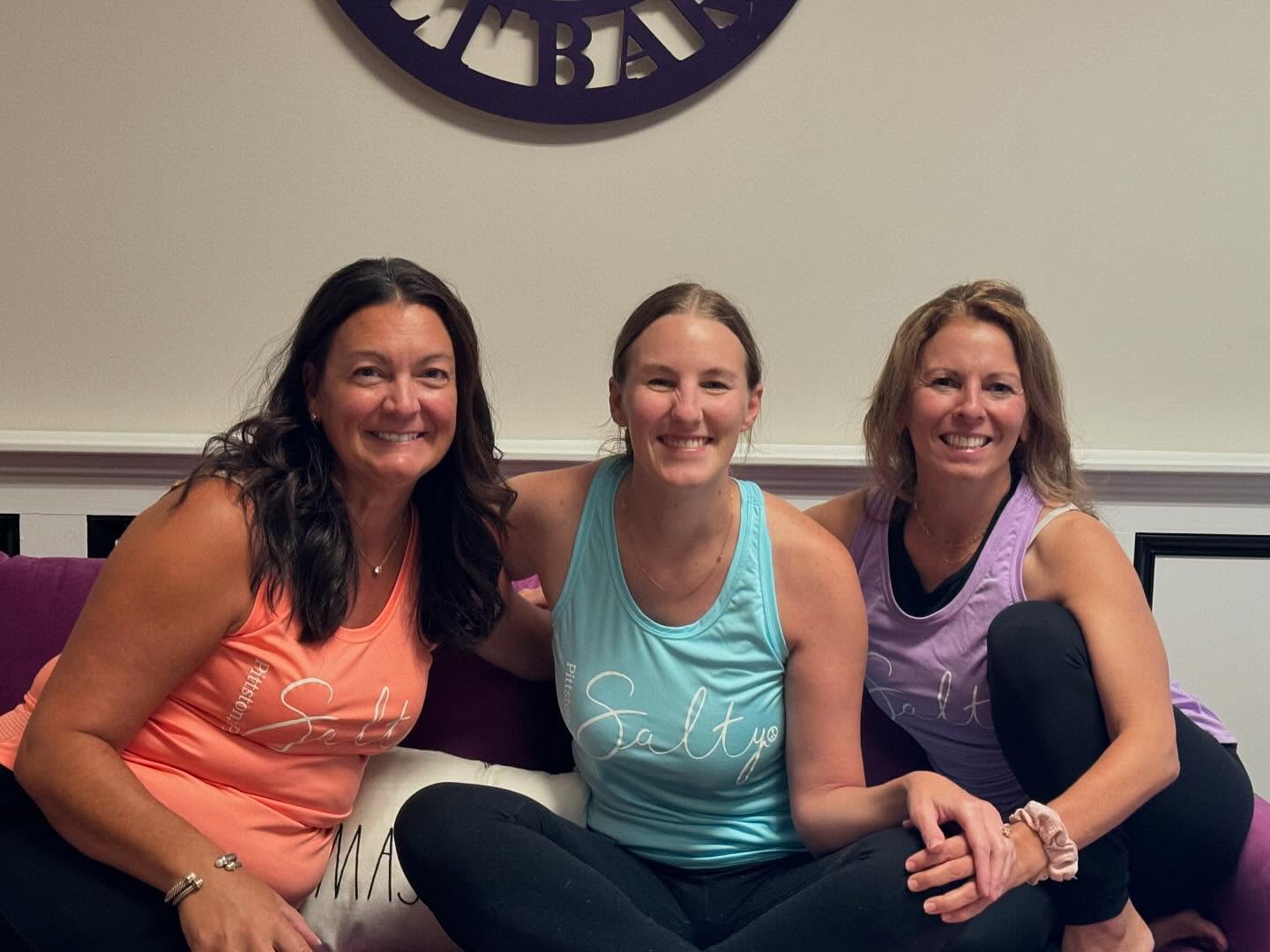
At The Salt Barre, we see this every day. Members connect, laugh, support one another, and share space in ways that extend far beyond the physical practice.
Those moments matter more than we often realize.
A Gentle Reminder This Month
During Mental Health Awareness Month, we want to acknowledge something important:
Caregivers spend a lot of time holding space for everyone else.
But your wellbeing matters too.
Taking care of yourself is not selfish.
It is one of the most important ways you can continue showing up for the people you love.
Whether it’s a barre class that boosts your energy, a Pilates class that reconnects you to your core, or a slow restorative practice that lets your nervous system finally exhale — giving yourself that time can make a meaningful difference.
Sometimes the most powerful thing you can do is simply allow yourself an hour to breathe, move, and be supported.
You deserve that care, too.
HAVE ANY
QUESTIONS?
Want to get started but have a few questions? Contact us today!
BOOK CLASSES with

Easily explore and reserve your favorite class or treatment online from anywhere with Mindbody Online.